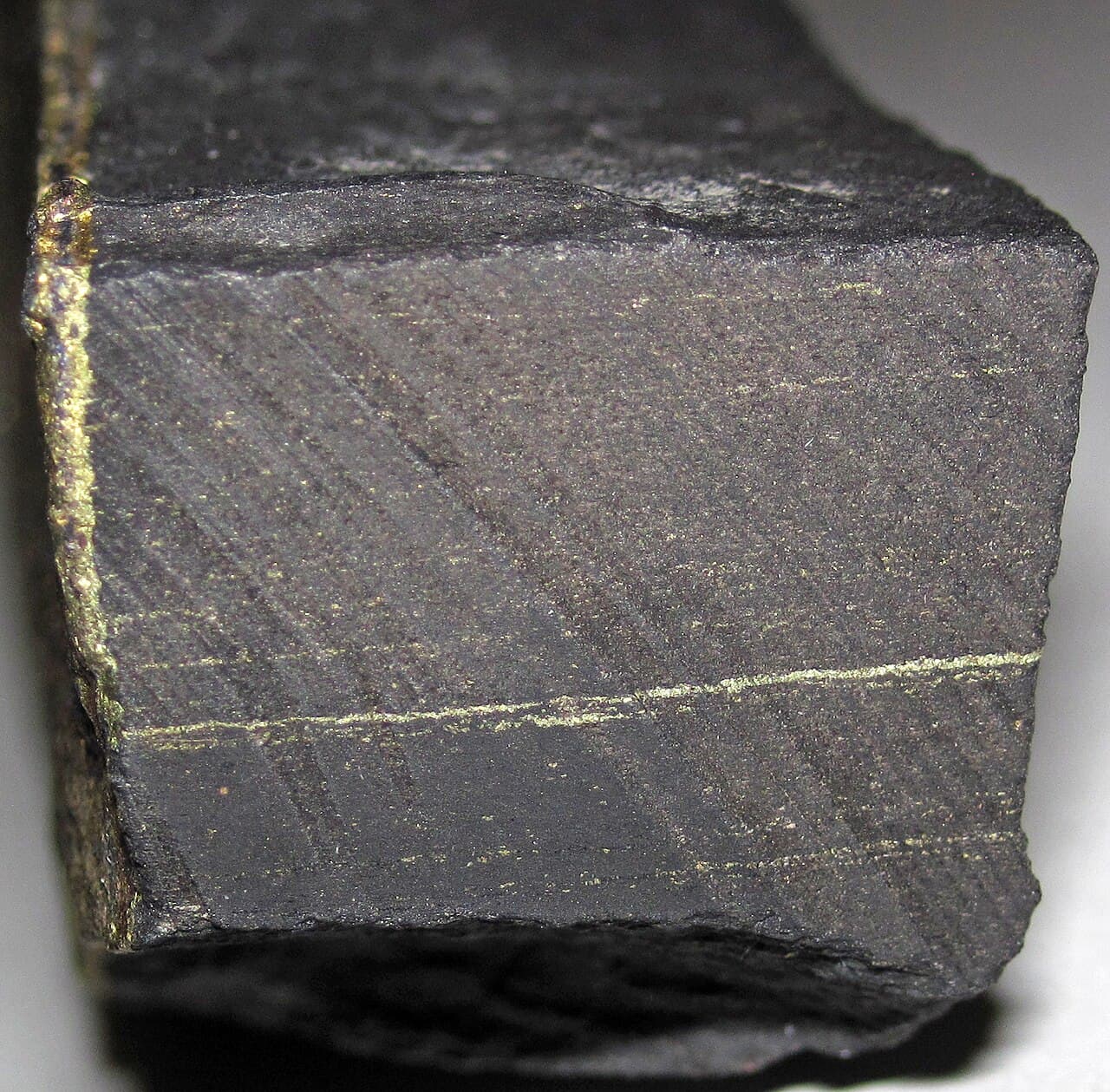
Each claim states how it is known and cites its evidence.
Establisheda reduced-facies copper deposit
How a source classifies it
The usgs sediment-hosted copper database classifies Lubin as a reduced-facies copper deposit.
- definition basis: Deposit-type field of the USGS sediment-hosted copper database, whose values are enumerated in the dataset itself.
- assertion basis: SOURCE_CLASSIFICATION
Evidence support: Supported by the cited evidence · 2 sources, single source
Evidence: D.P. 2003 · Primary authority
Established2 wt%m Copper
Reported for this deposit
The usgs sediment-hosted copper database reports a copper grade of 2.0 weight percent for Lubin.
- scope: depositAverage
- definition basis: Grade as the compilation reports it for this deposit.
- assertion basis: SOURCE_REPORTED
Evidence support: Supported by the cited evidence · 2 sources, single source
Evidence: D.P. 2003 · Primary authority
EstablishedShale; siltstone; sandstone
Reported for this deposit
The rocks reported as hosting Lubin are Shale, siltstone, sandstone, as named for this deposit by the USGS sediment-hosted copper database.
- precision note: The host lithologies are those the compilation names for this deposit. They are not inferred from a class description and not from a point falling inside a mapped polygon.
- assertion basis: SOURCE_REPORTED
Evidence support: Supported by the cited evidence · 2 sources, single source
Evidence: D.P. 2003 · Primary authority
Establishedchalcocite; covellite; bornite; chalcopyrite; galena; sphalerite; hematite
Reported for this deposit
The compilation reports 7 distinct minerals present at Lubin: chalcocite, covellite, bornite, chalcopyrite, galena, sphalerite, hematite. It records presence only: no abundance, no paragenesis and no assay follows from it.
- precision note: The compilation's mineral table holds 7 entries for this row, and the claim counts all 7 of them. The prose names 7 because a sentence of 7 mineral names is not readable; the count is stated so the list is never mistaken for the whole. Presence is not abundance, and the alphabetical order carries no paragenetic meaning.
- assertion basis: SOURCE_REPORTED
Evidence support: Supported by the cited evidence · 2 sources, single source
Evidence: D.P. 2003 · Primary authority
EstablishedRecorded as a deposit by the USGS sediment-hosted copper database, record 308.
How a source classifies it
Lubin is recorded as a deposit because the USGS sediment-hosted copper database includes it, as record 308. The compilation is a database of sediment-hosted copper deposits and carries this row among them.
- source record: usgs-sediment-hosted-copper-deposits-of-the-world record 308
- assertion basis: SOURCE_CLASSIFICATION
Evidence support: Supported by the cited evidence · 2 sources, single source
Evidence: D.P. 2003 · Primary authority
Established30 g/t Silver
Reported for this deposit
The compilation reports a silver grade of 30.0 grams per tonne of ore for Lubin. The field is defined as the average grade of silver for the deposit, stated as grams per metric ton of ore.
- scope: depositAverage
- definition basis: Grade as the compilation reports it for this deposit.
- precision note: Unit corrected in Phase 9. An earlier version published this figure as 30.0 weight percent, because the bulk ingestion mapped every grade column to weight percent. The compilation defines aggrd as “average grade of silver for the deposit, as grams per metric ton of ore” — copper and molybdenum are percentages in these files, silver and gold are grams per tonne. The published number was overstated by four orders of magnitude, and for several deposits it exceeded 100 percent, which is not a grade any rock can have.
- assertion basis: SOURCE_REPORTED
Evidence support: Supported by the cited evidence · 2 sources, single source
Evidence: D.P. 2003 · Primary authority
Open question
Derived by Lithoen
Lithoen records no mineral-system interpretation for Lubin. The corpus models six mineral systems and sediment-hosted copper is not among them, so there is nothing here to interpret this deposit as. The absence is a gap in Lithoen's system layer, not a statement about the deposit.
- precision note: Forcing this deposit into the nearest system the corpus happens to hold would assert a classification no source made.
- assertion basis: LITHOEN_DERIVED
Evidence support: Supported by the cited evidence · 2 sources, single source
Evidence: D.P. 2003 · Primary authority
Established2,600 Mt
Reported for this deposit
The usgs sediment-hosted copper database reports an ore tonnage of 2600.0 million tonnes for Lubin.
- tonnage category: compilerTotalForModelling
- definition basis: Ore tonnage as the compilation reports it for this deposit, compiled for grade-and-tonnage modelling rather than as a resource statement under a reporting code.
- assertion basis: SOURCE_REPORTED
Evidence support: Supported by the cited evidence · 2 sources, single source
Evidence: D.P. 2003 · Primary authority
Establishedhost rock; rock unit beneath; rock unit above — three fields, no thickness, no depth, no section
A property of a dataset or model, shown here for context — not an observation about this record.
The USGS sediment-hosted copper compilation states a deposit’s stratigraphic position with three fields: the immediate host rock of the mineralisation, the rock unit beneath it, and the rock unit above it. The metadata defines the host as "Type of rocks hosting the ore body, in the same terms used in published maps and reports", so the compilation repeats the words of the source literature rather than mapping them to a controlled vocabulary. This three-field arrangement is how the dataset expresses stratigraphic position, and it is not a section, a thickness or a depth.
- generality: DATASET_PROPERTY
- precision note: A property of the compilation, shown on this page because Lubin is one of its rows. It says nothing about Lubin in particular.
Evidence support: Supported by the cited evidence · one source
Evidence: D.P. 2003 · Primary authority