Skip to content
LITHOEN

Chemical element

Iron

The dominant element of Earth’s core and a major constituent of mantle and crustal minerals. Its two common oxidation states make it the principal recorder of redox conditions in rocks.

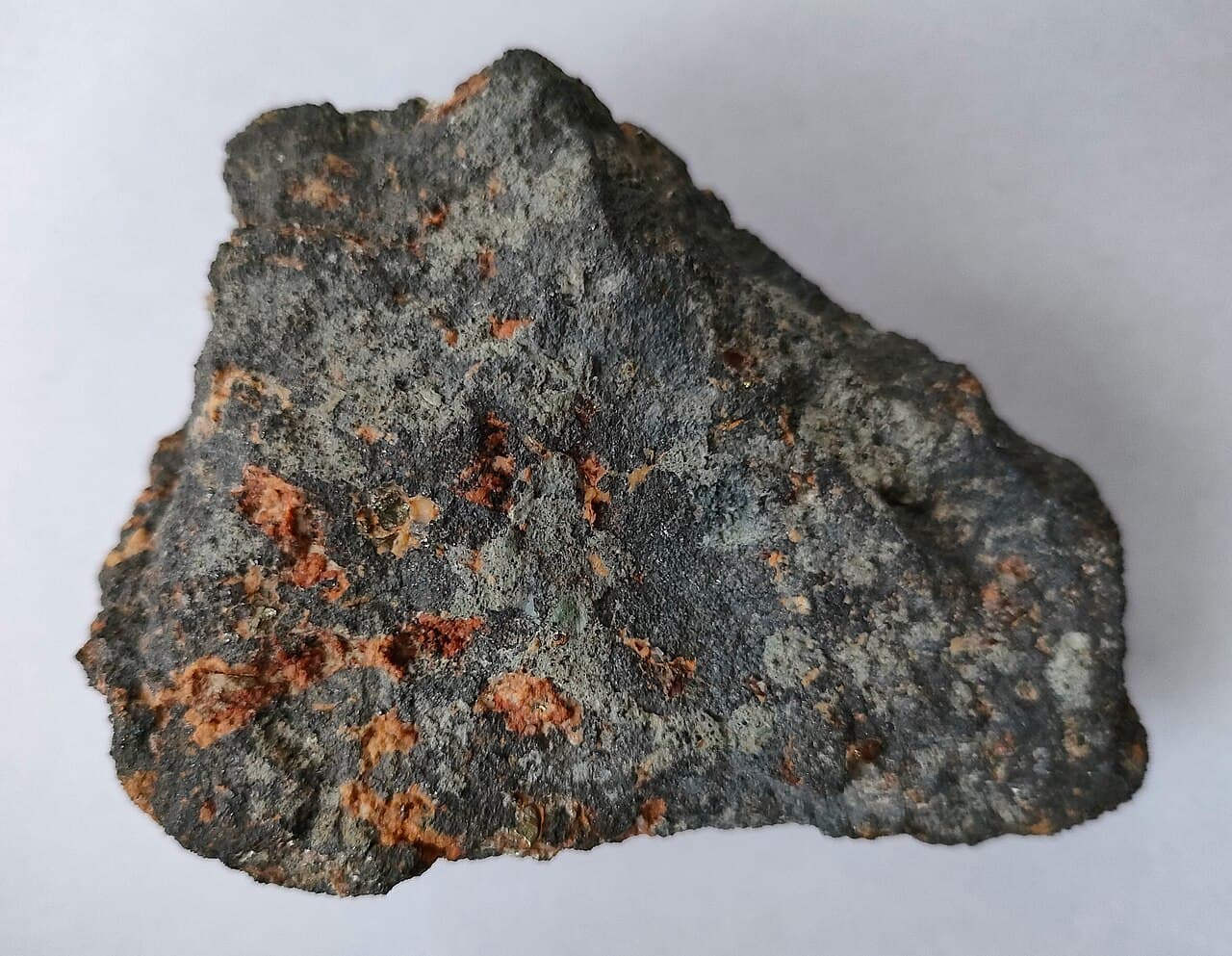
Black metallic magnetite crystals set among white calcite.
Magnetite crystals with calcite, from Vyhne, Slovakia. Magnetite carries iron in two oxidation states at once — its approved formula is Fe2+Fe3+2O4 — which is why it is both strongly magnetic and a sensitive recorder of redox conditions. Locality: Vyhne, Slovakia.

Mineralysk, CC BY-SA 4.0 · CC-BY-SA-4.0 · source · Derivative: Downscaled to 1000 px wide by the Wikimedia thumbnail service; no cropping, no colour or content alteration.

Classification

atomic number
26
symbol
Fe
block
d

How this record is known

4
Settled consensus
Cited as the accepted position of the discipline.

4 of 4 claims on this page cite at least one registered source. Counts describe how each statement is known, not how likely it is to be true.

What Lithoen records

Each claim states how it is known and cites its evidence.

Established26 protons

Iron has atomic number 26: its nucleus contains 26 protons, and that is what makes it iron.

  • definition basis: Atomic number is definitional: an atom with a different proton count is a different element, whatever else it shares.

Evidence support: Supported by the cited evidence one source

Evidence: Commission on Isotopic Abundances and Atomic Weights (IUPAC) 2024 Primary authority
Established55.845 u

The standard atomic weight of iron is 55.845(2), a single value because its isotopic composition does not vary appreciably between normal materials.

  • definition basis: CIAAW Standard Atomic Weights 2024; the parenthesised digits are the uncertainty in the last figures as published.
  • precision note: A property of the element as found in normal materials, not the mass of any individual atom.

Evidence support: Supported by the cited evidence one source

Evidence: Commission on Isotopic Abundances and Atomic Weights (IUPAC) 2024 Primary authority

EstablishedFerrous and ferric; magnetite carries both, hematite only ferric.

Iron occurs in rocks in two common oxidation states, and minerals record which. Magnetite contains both at once — its approved formula, Fe2+Fe3+2O4, carries ferrous and ferric iron in one structure — while hematite, Fe2O3, is wholly ferric.

  • definition basis: Read directly from the CNMNC-approved formulas, which write the oxidation states explicitly.

Evidence support: Supported by the cited evidence 3 sources, multiple sources, independence unknown

Evidence: Commission on New Minerals, Nomenclature and Classification, International Mineralogical Association 2026 Primary authority; Mineral Data Publishing 2001 Institutional reference; Mineral Data Publishing 2001 Institutional reference

In the knowledge graph

Figures

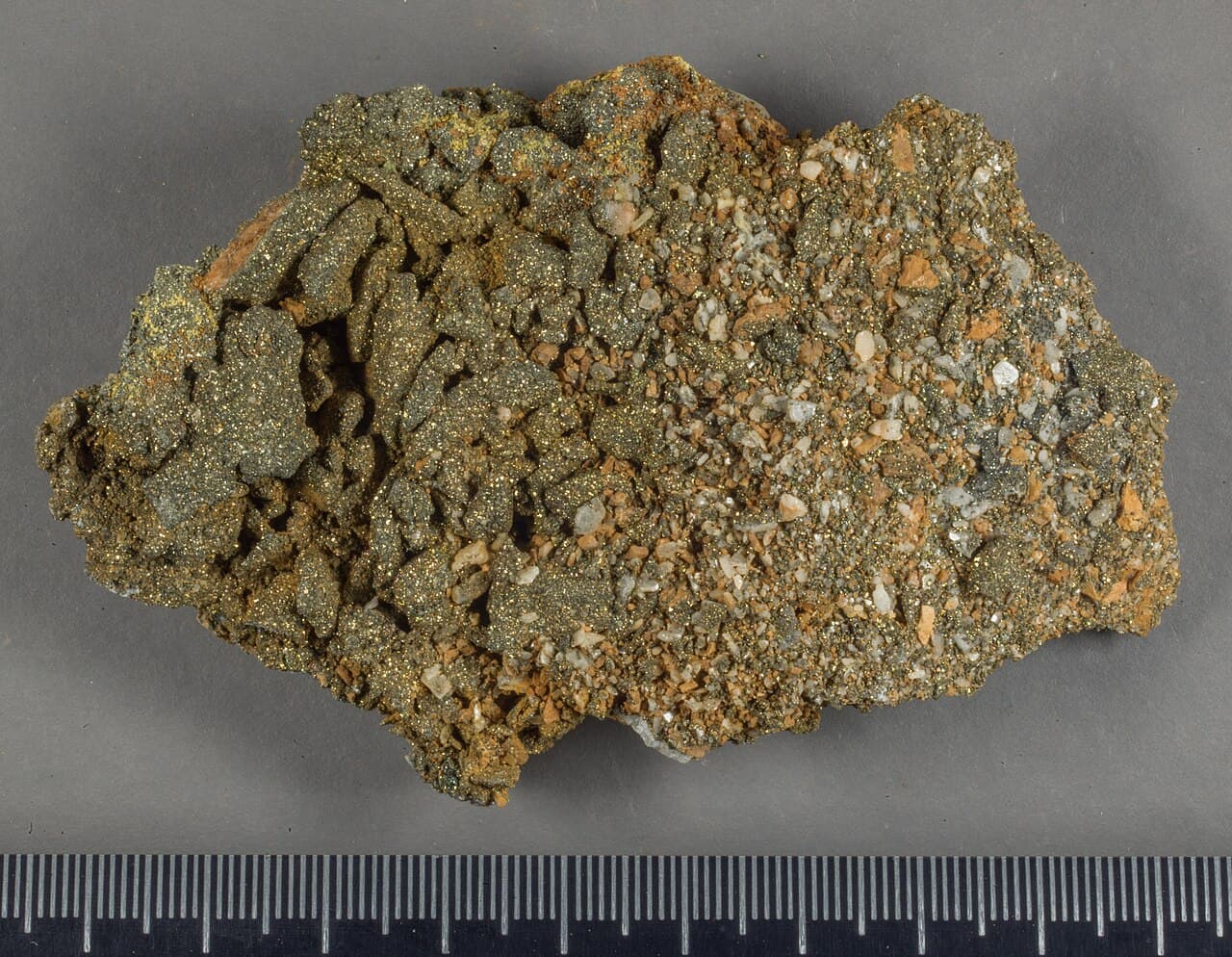
Brassy metallic cubic pyrite crystals on a pale mineral matrix.
Pyrite from Dreislar, Germany. Iron disulfide is the commonest sulfide mineral; its formation requires reducing conditions, and its breakdown on exposure to oxygen and water is what drives acid generation from sulfide-bearing rock. Locality: Dreislar, Germany.

Hannes Grobe, CC BY-SA 4.0 · CC-BY-SA-4.0 · source · Derivative: Downscaled to 1000 px wide by the Wikimedia thumbnail service; no cropping, no colour or content alteration.

Record last updated 2026-09-06. Corrections follow the published corrections policy; superseded claims are retained, never silently edited.